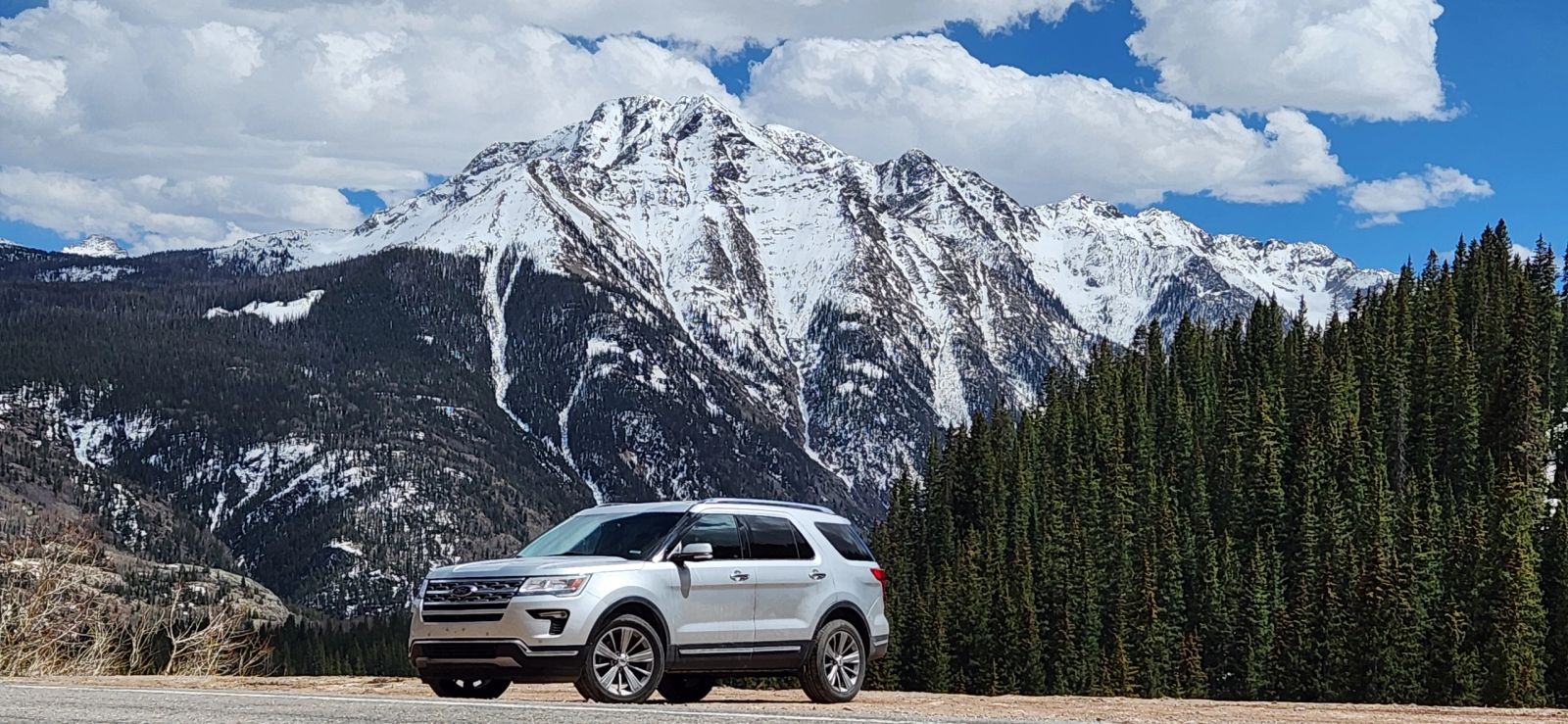
Breckenridge sits at 9,600 feet and gets about 300 inches of snow a year. Driving here in winter is not hard, but it is different from driving at home: the roads are steep, the weather changes in an hour, and Colorado has laws about what your vehicle must be. This guide covers what you need to know before you drive anywhere in Summit County between November and April. Every car in our fleet is an all-wheel-drive SUV on winter tires, so if you rent from us the legal part is already handled.
The Colorado Traction Law, in plain English
From September 1 to May 31, every vehicle on I-70 between Dotsero and Morrison (that includes the whole stretch from Denver to Vail) must have either all-wheel or four-wheel drive, or tires marked M+S, mountain-snowflake or snow tires, and in every case at least 3/16 inch of tread. CDOT can turn the same rule on for other highways during a storm. Fines start around $130 and go past $650 if an unequipped car blocks the road.
In a severe storm CDOT can escalate to the passenger vehicle chain law: every car, AWD included, needs chains or an approved alternative traction device. This is rare and short-lived. If you see it on the overhead signs, the right move is a coffee in town until it lifts.
Our AWD and winter driving page explains the difference between AWD, 4WD and chains in more detail.
Roads around Breckenridge and what to expect
- Highway 9 (Main Street north to Frisco): four lanes, plowed early, the easiest drive in the county. Watch for elk and for ice in the shade near the Blue River.
- I-70 to Keystone, Silverthorne and Denver: busy and plowed, but the Eisenhower Tunnel approaches and the Georgetown hill close during big storms, and Sunday afternoons eastbound can be a two-hour crawl. Go early or go late.
- Swan Mountain Road (Highway 9 to Keystone): the short cut to Keystone over a 10,000-foot pass. Steep, curvy, plowed but often icy at the top. Fine in an AWD on winter tires, no fun in a front-wheel-drive sedan.
- Hoosier Pass (Highway 9 south to Fairplay): 11,500 feet, exposed, closes in wind. Only drive it if you have a reason to go south.
- Loveland Pass (US 6): the hazmat route over the Divide, 11,990 feet, no guardrails in places. Beautiful on a clear day; skip it when it is snowing.
- Vail Pass (I-70 west): closes several times a season for crashes and avalanche control. Check before you commit to a Vail or Beaver Creek day.
- In town: Ski Hill Road to Peak 8, Four O’Clock Road and the Peak 7 streets are steep and get polished by traffic. Go slow, leave two car lengths and do not stop on the hill if you can avoid it.
Ten habits that keep you out of trouble
- Check COtrip.org or the COtrip app before every drive out of town. It shows closures, chain law status and camera views.
- Clear the whole car: roof, hood, lights and the camera on the tailgate. Snow sliding off your roof onto your windshield at 60 mph is a real thing here.
- Brake early and gently. AWD helps you go, not stop. Four winter tires on an SUV still need two to three times the stopping distance of dry pavement.
- Keep the tank above half. Closures can last hours and the heater needs fuel.
- Downshift on long descents (use L or the manual mode) instead of riding the brakes. The Explorer and MKX both have it.
- Watch for black ice at bridges, in shadows and anywhere the road looks wet when it is below freezing.
- Give plows room and never pass one on the right.
- Wildlife is most active at dawn and dusk. Elk and moose cross Highway 9 regularly between Breckenridge and Frisco.
- Park where the signs say. Breckenridge tows during snow-removal hours on marked streets.
- Build in time. A 20-minute drive in July is 40 minutes in a January storm, and the ski-traffic rush on I-70 adds more.
Which car to drive in Summit County
If your airport rental is a front-wheel-drive sedan on all-season tires, it does not meet the traction law on I-70 and will struggle on the hills in town. Our 2015 and 2018 Ford Explorers and the Lincoln MKX are all AWD on winter tires with a snow brush in the back, and they are delivered to your door with a keypad code so there is nobody to meet. Rates start at $75 a day off-season with 200 miles included; see every price on one page.
Winter driving in Breckenridge: questions we get
Is the Colorado traction law in effect right now?
It is in effect on I-70 between Dotsero and Morrison from September 1 to May 31 every year, whether or not it is snowing. During storms CDOT can also activate it on other mountain highways, and can escalate to the chain law. Check cotrip.org before you drive.
Do I need chains for an AWD SUV in Breckenridge?
Not under the normal traction law: an AWD or 4WD vehicle with at least 3/16 inch of tread meets it. Chains or an approved alternative device are required only when CDOT activates the passenger vehicle chain law, which happens during severe storms. In those conditions the safest plan is usually to wait a few hours until the road reopens.
Is it safe to drive from Breckenridge to Keystone or Vail in winter?
Usually yes, with an AWD vehicle on winter tires and some margin in your schedule. Swan Mountain Road to Keystone and I-70 over Vail Pass are plowed and busy, but both close during big storms. Leave early, keep the tank above half and check conditions before you go.
What should I keep in the car in winter?
Water, snacks, warm layers, a phone charger, sunglasses and a small shovel. Every Summit Rental Car SUV carries a snow brush and ice scraper in winter.
Can I rent a car in Breckenridge for just the days I plan to drive?
Yes. Many guests arrive by shuttle, rent an SUV for the two or three days they want to leave town, and skip the airport rental entirely. We deliver to your lodging in Breckenridge for $60 or you pick up free on Airport Road.
Summit Rental Car – Breckenridge
Office: 305 S Ridge St, Unit 7906, Breckenridge, CO 80424 (by appointment)
Free pickup lot: 1680 Airport Rd, Unit C1, Breckenridge, CO 80424
Call or text (970) 445-3092 · Open 24 hours, 7 days
Delivery to Breckenridge, Frisco, Copper Mountain, Keystone, Silverthorne and Dillon